Logo
about-the-foundry

About the Foundry

The foundry division represents a powerful collaboration between decades of engineering expertise and modern manufacturing excellence. With over 90 years of technological leadership, Christian Pfeiffer Maschinenfabrik GmbH (CPB), Germany, has earned a global reputation for innovation in grinding systems, process engineering, and industrial technologies. To extend this expertise into the foundry sector, Chanderpur Works Pvt. Ltd., a flagship company of Chanderpur Group, has established a strategic joint venture with Christian Pfeiffer Maschinenfabrik GmbH (CPB).

Our foundry combines world-class engineering expertise with advanced manufacturing capabilities to deliver castings that perform reliably in the most demanding industrial environments. The synergy between Christian Pfeiffer Maschinenfabrik GmbH (CPB), German engineering heritage and Chanderpur Group's manufacturing excellence enables us to provide products that offer superior wear resistance, dimensional accuracy, and operational longevity.

With modern infrastructure, advanced metallurgical control, stringent quality systems, and a highly experienced engineering team, we remain committed to delivering casting solutions that help industries improve productivity, reduce maintenance costs, and achieve long-term operational success.

Precision Manufacturing Process

At our foundry, every casting undergoes a meticulously controlled manufacturing journey. From pattern development to final dispatch, each stage is designed to ensure dimensional accuracy, metallurgical integrity, and superior mechanical performance.

  • Pattern Making

    The manufacturing process begins with pattern development, which serves as the foundation of every successful casting. Our skilled pattern makers and carpenters create high-quality patterns using advanced woodworking techniques and precision CNC router machining. These patterns are developed with strict adherence to design specifications, ensuring accurate mould formation and dimensional consistency throughout the production process.

  • Core Making

    To achieve complex internal geometries and intricate casting designs, specially engineered cores are manufactured using high-quality silica sand and advanced resin binder systems. The prepared cores are carefully moulded and baked under controlled conditions to achieve the desired strength, dimensional stability, and thermal resistance. This stage plays a critical role in producing castings with precise internal configurations.

  • Mould Preparation

    Once the patterns and cores are ready, mould preparation begins. The patterns are positioned within mould boxes, and specially prepared moulding sand is compacted around them to create the desired cavity. After removing the patterns, the mould cavity accurately reflects the final casting shape. The cores are then strategically placed within the mould before the mould halves are assembled and securely closed. This process ensures accurate casting geometry and minimizes manufacturing defects.

  • Raw Material Selection and Verification

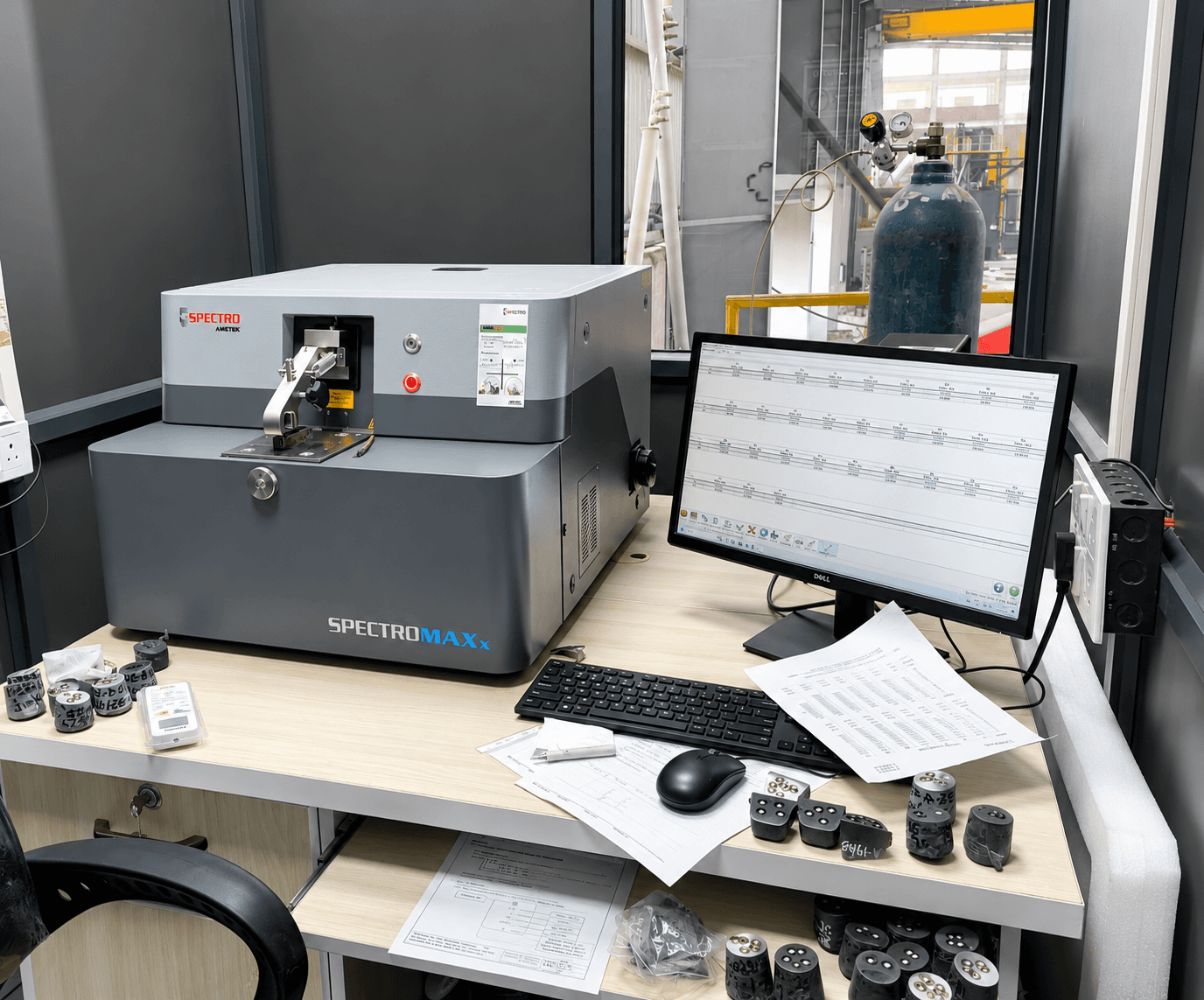
    The quality of a casting begins with the quality of its raw materials. Carefully selected scrap, alloys, and ferro-alloys are sourced and verified before entering the production cycle. Each material undergoes Positive Material Identification (PMI) testing to ensure compliance with specified chemical compositions. Only approved materials are charged into the melting furnace, maintaining complete control over the metallurgical properties of the final product.

  • Melting and Metallurgical Control

    The melting process is carried out under strict operational supervision using modern furnace systems. Throughout the melting cycle, temperatures are continuously monitored and controlled to achieve optimum metallurgical conditions. Alloying elements such as chromium, molybdenum, nickel, and other performance-enhancing materials are added according to the required grade specifications.

    Samples of molten metal are collected and analyzed using advanced spectrometers and PMI testing equipment. This real-time chemical analysis ensures precise composition control and guarantees that the molten metal meets all technical requirements before pouring.

  • Tapping and Ladle Treatment

    Following successful metallurgical verification, the molten metal is tapped from the furnace into specially designed ladles. During this stage, additional treatment processes may be carried out to optimize metal quality and cleanliness. The ladles are then carefully transported to the moulding area under controlled conditions to maintain temperature and metallurgical consistency.

  • Pouring and Solidification

    The pouring operation is one of the most critical stages in the casting process. Molten metal is carefully poured into the prepared moulds using controlled techniques that ensure smooth filling and minimize turbulence. As the metal cools and solidifies within the mould cavity, it takes the exact shape and dimensions required for the final component. Controlled solidification helps achieve superior mechanical properties and structural integrity.

  • Shakeout and Casting Recovery

    Once the castings have completely solidified and cooled, the moulds are opened during the shakeout process. The moulding sand is separated from the casting, revealing the finished component. This stage marks the transition from molten metal to a tangible engineered product ready for further processing.

  • Fettling, Grinding and Surface Finishing

    After shakeout, the castings undergo extensive cleaning and finishing operations. Excess material such as runners, risers, and gates is removed, and the surfaces are cleaned to eliminate any residual sand or imperfections. Precision grinding and finishing operations further improve dimensional accuracy and surface quality, ensuring the castings meet customer specifications and international standards.

  • Advanced Heat Treatment

    To enhance wear resistance, toughness, and overall mechanical performance, castings undergo carefully controlled heat treatment processes. Depending on the material grade and application requirements, heat treatment may include:

    • Water Quenching
    • Forced Air Quenching

    These processes refine the microstructure of the material, resulting in improved durability and extended service life under challenging operating conditions.

  • Comprehensive Quality Assurance

    Quality is integrated into every stage of our manufacturing process. Our dedicated inspection and testing facilities ensure that every casting meets stringent performance and reliability standards before shipment.

    Our quality assurance capabilities include:

    • Dimensional Inspection
    • Chemical Analysis
    • Metallurgical Examination
    • Tensile Testing
    • Impact Testing
    • Positive Material Identification (PMI)
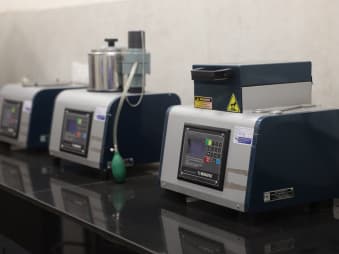
    • NABL Laboratory Testing

    Every casting is thoroughly evaluated to ensure compliance with customer requirements and international quality standards.

  • Finishing and Dispatch

    The final stage involves detailed inspection, marking, documentation, and packaging of approved castings. Each component undergoes a final quality review before dispatch to ensure complete traceability and customer satisfaction. With robust logistics support and careful packaging practices, our products are safely delivered to customers across domestic and international markets.

logo
logo

Enquire Now

Get expert guidance for your successful business journey.

icon